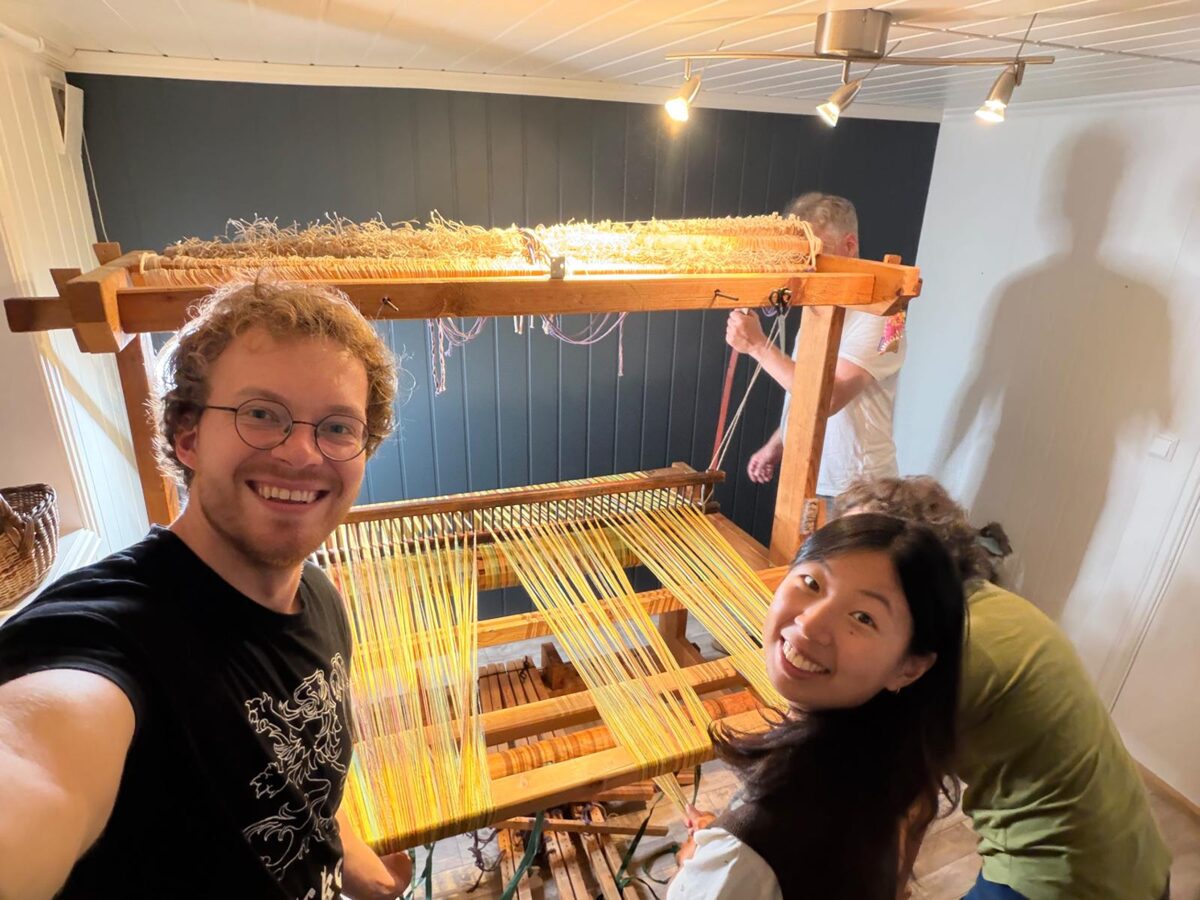
How the weaving process works in brief
September 26, 2026 at 3:23 pm,
No comments
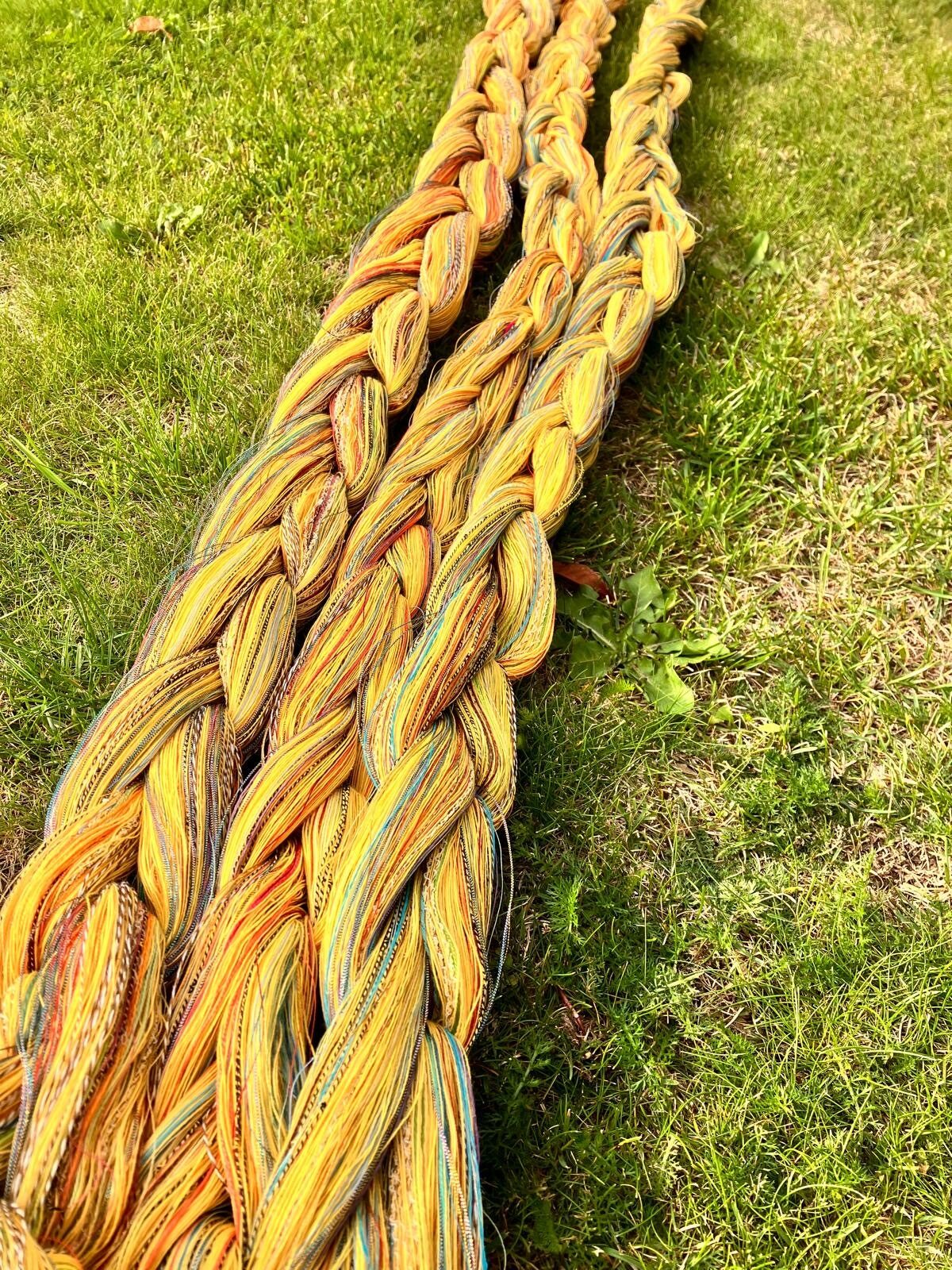
First, I start with a sketch that I then transfer to cardboard. This will be the foundation of the composition of the tapestry. When the tapestry is in the loom, only about 15 cm of the overall image is visible, so having a cardboard "backing" helps keep track of which part of the image I'm working on. While I'm weaving, I freely experiment with colors and threads, which vary widely. The focus isn't solely on color (like warm/cool tones or shadow/light relationships) - texture, surface, tactility are equally crucial factors. Specialty threads - like metallic ones, for example - can be added to a base thread color as an accent, or they can serve as independent elements. The same applies to silk or bouclé yarns; it is vital to integrate them thoughtfully into the whole, otherwise the final result (which only becomes fully visible once the tapestry is removed from the loom) might fail to come together cohesively. That is why I have always believed that weaving a tapestry is akin to "painting" with yarn.
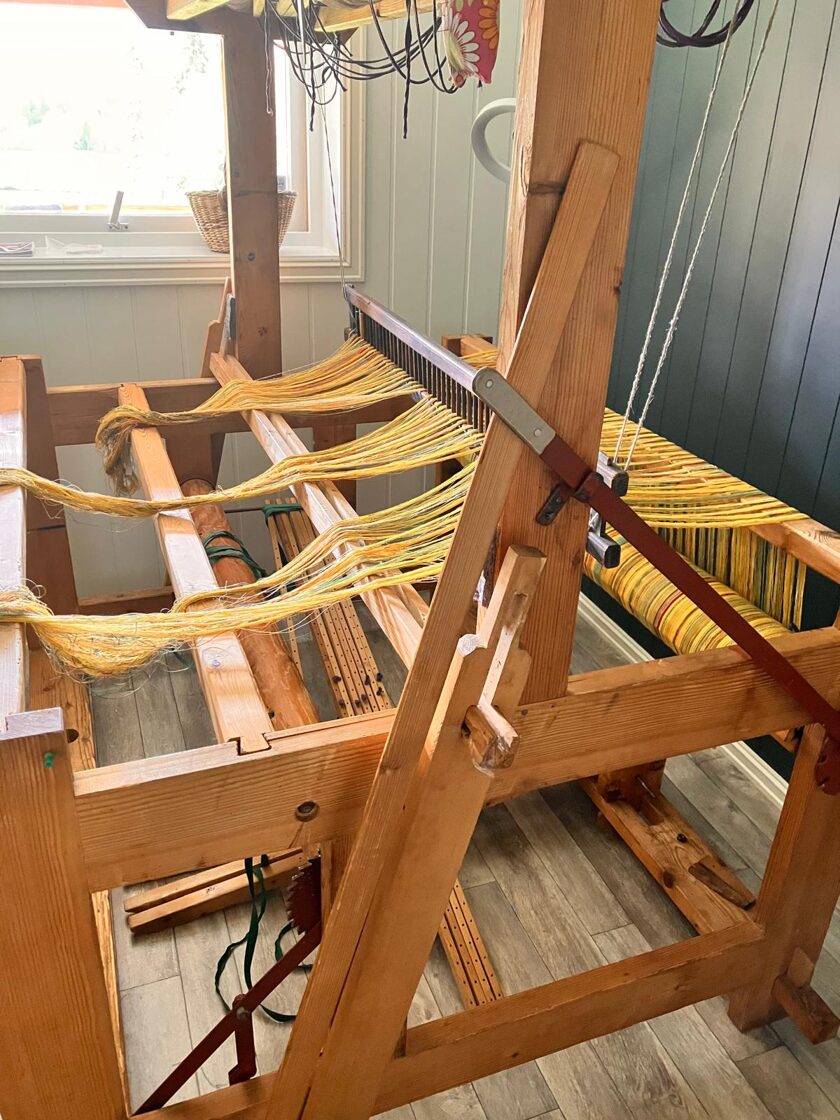
Additionally, of course, it occurred to me (🫣🤷🏻♀️) that I could also play with the warp threads (the vertical ones on the loom). Usually, these are woven over and they remain invisible - they serve only as a foundation. But here, it becomes a key element in creating shadow, light, and depth (or, in other words, the "story"). Sometimes, while working, I feel as though - much like on a computer - countless files and windows are open simultaneously, and my focus is absolute; yes, in those moments, any kind of intrusion into my field of attention is a major disruption ;))) It isn't easy for my family and friends - but knowing this, I am grateful that I still have you all 🤍🙏🏻🌻