Why tapestry?
January 26, 2026 at 10:00 pm,
No comments
A tapestry is a woven story, created through weaving techniques and the synergy of a particular textile artist’s personal hand within the material. That’s what fascinates me: how particularly an idea can grow and develop, transform—from a sketch, from a sheet of paper, all the way to the choice of materials and into completeness by my own hand, deep feelings, practice, and theory. Guided by an experienced hand and inspiration, fabric can become a story.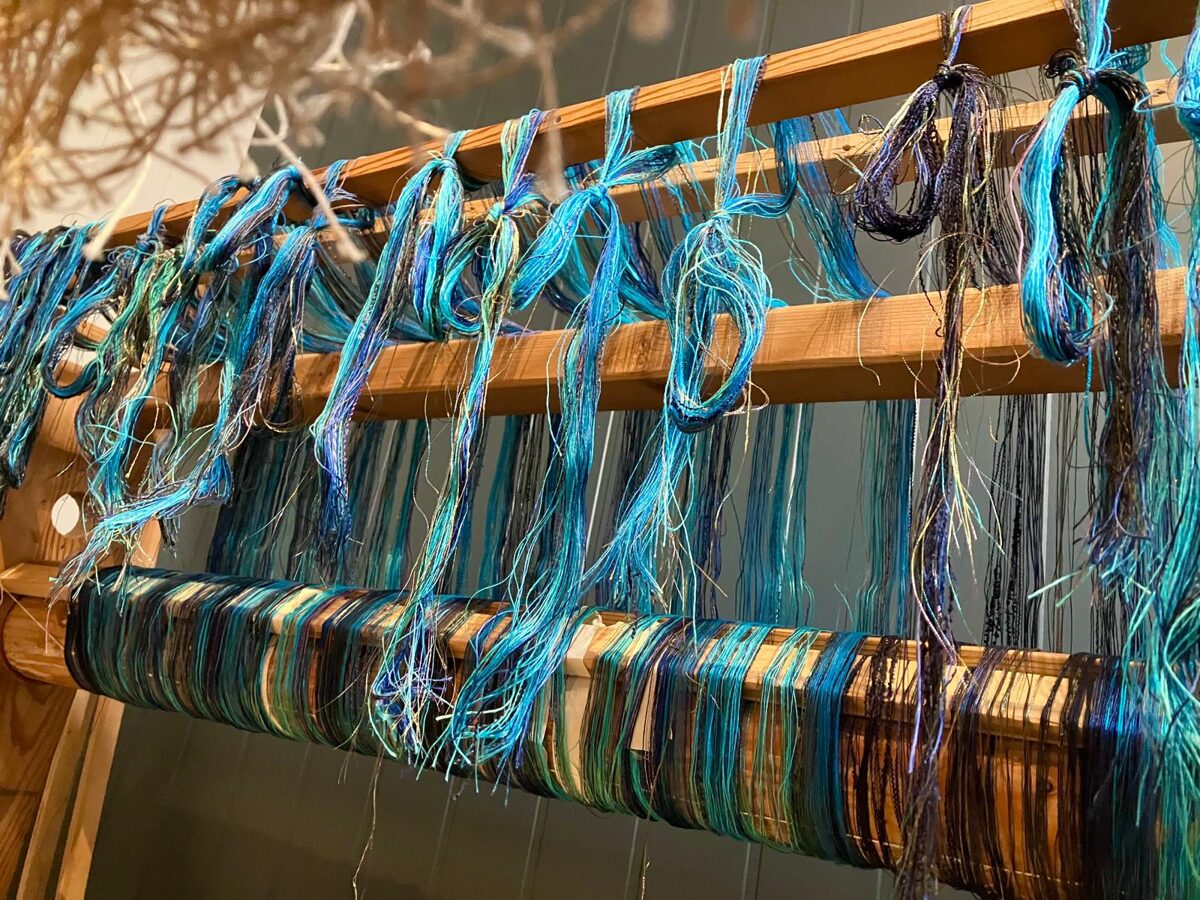
Tapestry weaving is, first and foremost, a painting. A painting in material, where what matters is not only composition and color, but also surface and texture. The method, the weave—how the thread is woven into the warp—determines whether the tapestry will be dense or whether it will interact with rays of light in a space and create yet another mediated image through the interplay of light and shadow. Drawing and painting together with virtuosity and a feeling of materiality. Everything in one place, everything as a single whole.
Originally, in the 14th century, tapestries were woven in manufactories by weavers—masters of their craft. There was an artist’s sketch, which was then realized into material. The idea and the execution were separate. The phenomenal story of Baltic textile artists begins in Soviet times. Yes, harsh times for art and culture in general, but not for tapestry. Large monumental themes could be realized by the artist in material starting already from the concept and the sketch. Yes—one person as an orchestra. ;))
Sometimes—no, always—when seeing the result of such time-consuming work, I am left breathless with amazement, because in textile art there is always room for the unanticipated, for a mythical kind of wonder.